
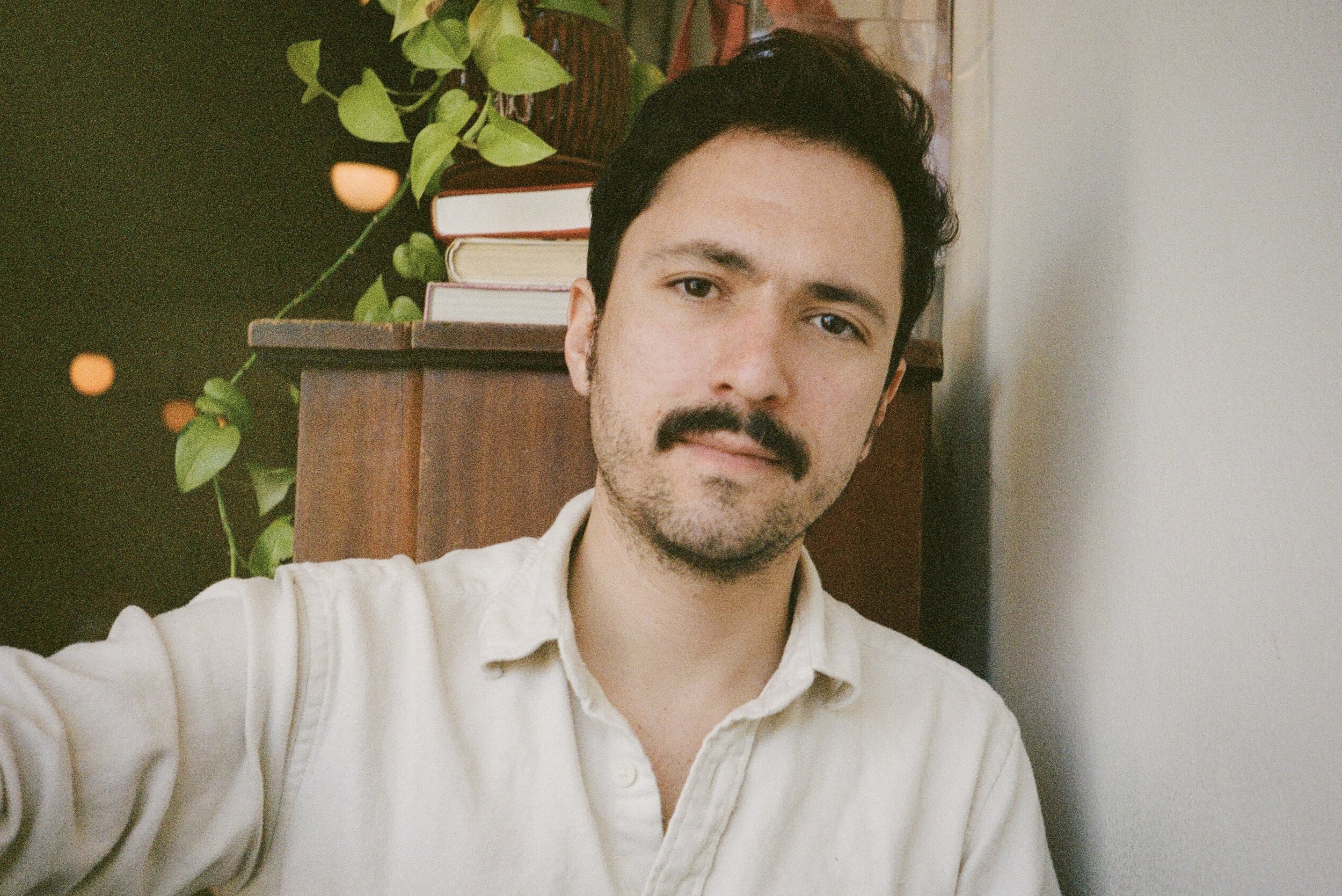
After attending The Academy, Pablo Monterrubio ‘07 received his BFA from Maryland Institute College of Art and later an MFA in Film, Video, New Media & Animation from the School of the Art Institute of Chicago. He teaches in both the Media Arts and Visual Arts departments at The Academy.
Tell us about your time as a student at The Academy.
The Academy is magical. The sounds and vibrations coming from all the different departments mixed with the ringing of the church bells. Everything is in conversation. It’s a kind of polyphony of creativity.
I’m grateful that I spent some of my most important dreaming years here, at an age when you haven’t yet learned all the reasons why something is supposed to be impossible. I did some super beautiful dreaming here.
“Returning to The Academy as a teacher has been very meaningful to me. I now find myself teaching alongside some of the teachers who once taught me.”
What has your trajectory been like after leaving The Academy?
After The Academy, I studied at the Maryland Institute College of Art, where I received my BFA. I later earned an MFA in Film, Video, New Media & Animation from the School of the Art Institute of Chicago. I was lucky to attend both institutions on full merit scholarships.
My practice has continued to move between filmmaking, sculpture, animation, installation, and interactive media. I am interested in narrative, atmosphere, materiality, and making immersive worlds. My work has been exhibited internationally, including in Mexico, Spain, South Korea, Germany, and Romania.
What classes do you teach and what is it like to teach at your alma mater?
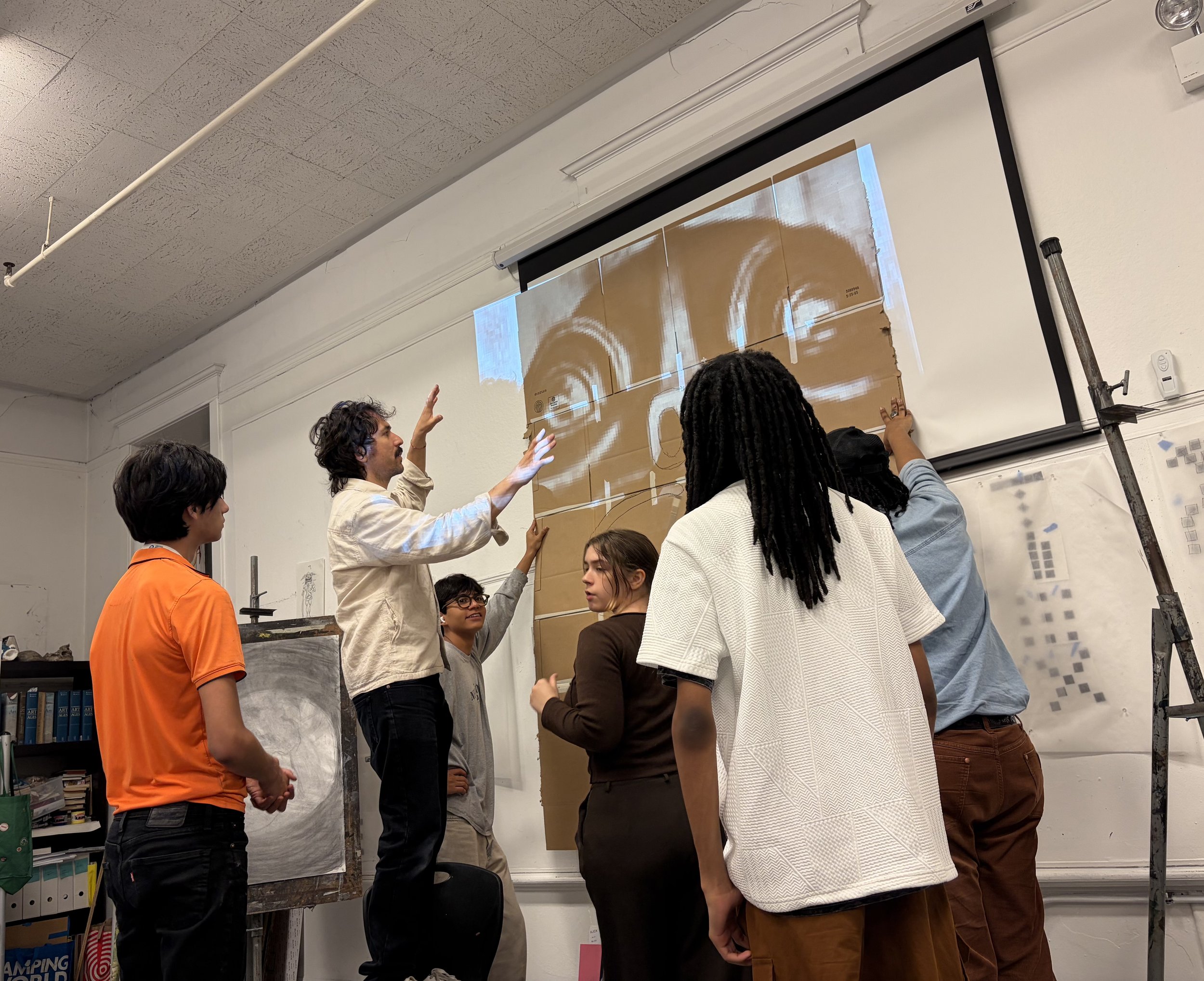
I teach Drawing and Experiential Design at The Academy, and I have also taught Video Production. I kind of approach every medium through the lens of cinema. In my Drawing class, for example, we are thinking about images in relation to time. We have explored charcoal animations and drawing with light. In Experiential Design, we are translating Fritz Lang’s 1927 film Metropolis into a large-scale, immersive installation.
Returning to The Academy as a teacher has been very meaningful to me. I now find myself teaching alongside some of the teachers who once taught me. I also feel a connection to the students because I remember what it felt like to be sitting where they are sitting.
I know how important it is to have a teacher who is passionate and who pushes you to be brave and to trust your guts.
Do you have a particular pedagogy you use as a teacher?
I promote experimentation, collaboration, and learning by just jumping into the process of making. I encourage students to listen to the material. Every material has its own possibilities and limitations, and I believe a good artist is always working in conversation with that and finding possibilities where they aren’t immediately visible. I want students to feel that they can make ambitious things, not because I gave them a formula to follow, but because they learned how to navigate uncertainty.
What are you planning at The Academy this year to celebrate the 100th anniversary of the release of Fritz Lang's Metropolis?
Fritz Lang’s Metropolis was released in 1927, which means that in 2027 the film will be 100 years old. What's cool is that the future imagined by the film takes place in 2026.
To celebrate this, I am developing an interdisciplinary student project in which we will translate Metropolis from the screen into a large-scale, immersive installation.
Students will explore the strengths and limitations of different mediums. Film controls our experience through cinematography, camera angles, framing, editing, pacing, etc. An installation works differently. Audiences can move through the space and become part of the work. How can we create the same tension, emotion, atmosphere, and rhythm in a physical environment? What can an immersive installation do that film can’t? How does changing the medium change the meaning of the original work?
Studying Metropolis also gives us a unique way to talk and think about the world we live in today. Through the film, we will examine technology, labor, architecture, AI, climate, inequality, automation, surveillance, bodies, cities, machines, utopias and dystopias, etc. Students will consider how images, stories, and spaces shape the way we understand systems. By looking at a vision of the future imagined 100 years ago, we can ask what changed, what became true, what didn’t, and what kind of future is ahead of us.